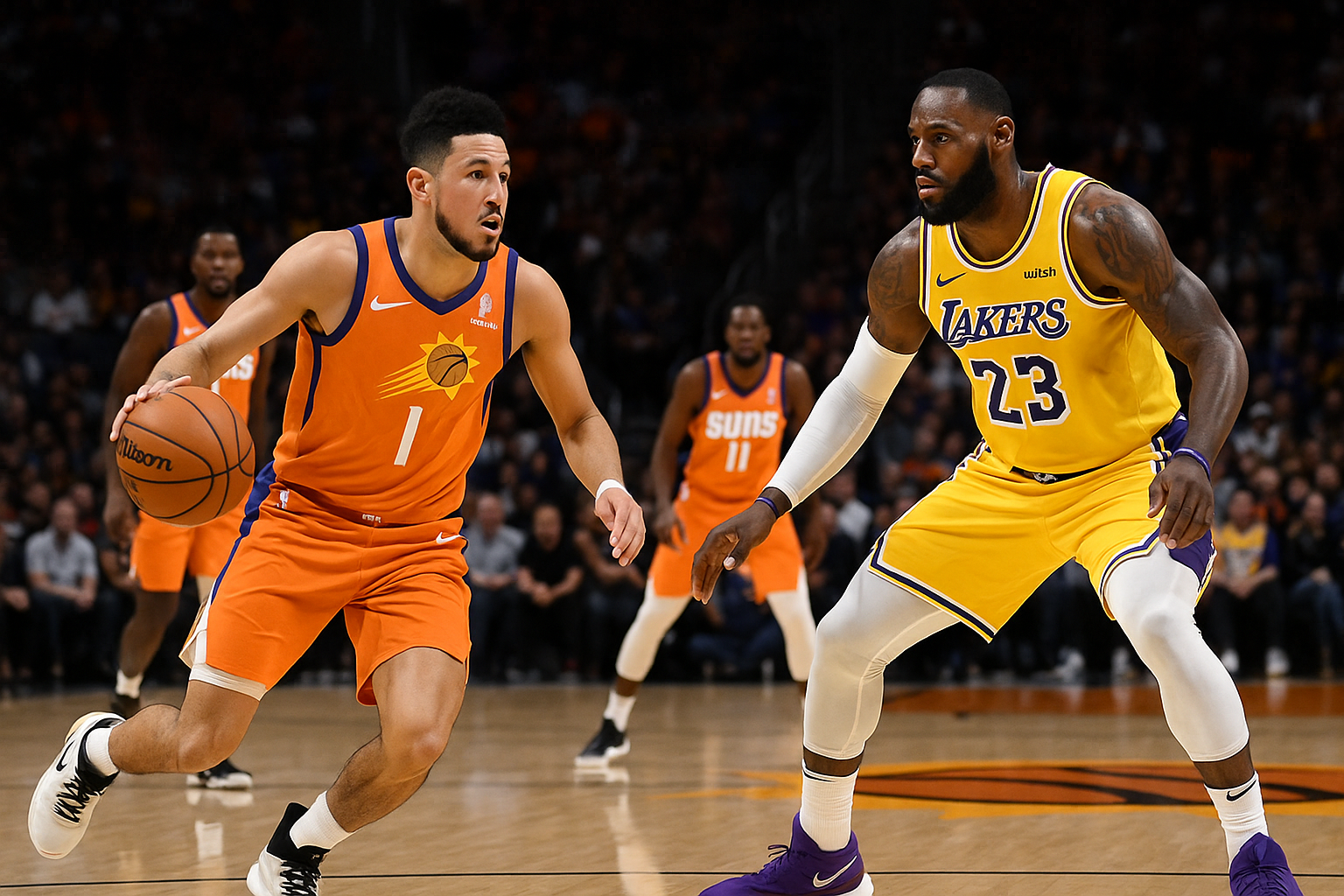
Phoenix Suns vs Lakers Match
Introduction
When people search for “Phoenix Suns vs Lakers match player stats”, they’re rarely satisfied with a simple box score.
They want to know:
Who controlled the game?
Which stars actually delivered?
Which role players quietly changed everything?
This detailed guide turns Suns vs Lakers player stats into a clear, structured, and practical resource for fans, analysts, fantasy players, and bettors. You’ll learn how to read the numbers, how to spot trends between both teams, and how to use these insights to predict future matchups with more confidence.
Why Phoenix Suns vs Lakers Match Player Stats Matter
The Phoenix Suns vs Los Angeles Lakers matchup consistently features:
- Elite shot creators and floor spacers
- Interior strength vs perimeter firepower
- Tactical adjustments between coaching staffs
- High-pressure possessions with playoff-style intensity
Because both teams often rely on multiple offensive engines rather than a single option, their player stats reveal:
- How the offensive priority shifts game by game
- Whether pace favors transition-heavy attacks or half-court sets
- How each team responds to mismatches, injuries, or foul trouble
Studying these stats over multiple meetings helps you understand more than one result. It helps you build a long-term picture of how this matchup behaves.
Core Player Stat Categories To Track
To properly analyze any Phoenix Suns vs Lakers match player stats, start with these essential segments.
1. Scoring Output And Efficiency
Key indicators:
- Points (PTS)
- Field Goal Percentage (FG%)
- Three-Point Percentage (3P%)
- Free Throws Attempted (FTA)
What to look for:
- Did Suns wings and guards stretch the floor with efficient shooting?
- Did Lakers stars pressure the rim, draw fouls, and control the paint?
- Was one team reliant on difficult isolation shots while the other generated clean looks?
A high point total with poor efficiency signals forced offense. Moderate scoring with strong efficiency often matters more than raw totals.
2. Creation, Playmaking, And Turnovers
Ball control is a deciding factor in this matchup.
Focus on:
- Assists (AST)
- Turnovers (TOV)
- Assist-to-Turnover Ratio
- Who initiated the offense (primary ball-handlers)
Questions to ask:
- Did the Suns rely on multiple playmakers to move the ball, or did possessions stagnate?
- Did the Lakers share the ball or lean too heavily on one creator?
- Which team forced more live-ball turnovers leading to transition points?
Better ball security plus consistent playmaking usually dictates tempo and shot quality.
3. Rebounding And Second-Chance Opportunities
In many Suns vs Lakers games, the rebounding battle quietly decides the outcome.
Key stats:
- Total Rebounds (REB)
- Offensive Rebounds (OREB)
- Second-Chance Points
If the Lakers’ size dominates the boards, they generate extra possessions and easy put-backs.
If Suns forwards and guards gang-rebound effectively, they neutralize that edge and ignite fast breaks.
Track:
- Which bigs close defensive possessions reliably
- Whether perimeter players help on the glass or leak out too early
4. Defensive Impact And Hustle Stats
Defense rarely shows in highlights, but it is clear in the numbers.
Look at:
- Steals (STL)
- Blocks (BLK)
- Contested shots
- On-ball defense against primary scorers
- Matchup choices (who guards which star)
Important patterns:
- A guard who records multiple steals and pressures ball-handlers changes the rhythm of the game.
- A rim protector who alters shots inside can lower the opponent’s efficiency even without huge scoring.
Defensive stats plus on-floor impact help explain why certain lineups work better than others in this matchup.
5. Bench Production And Role Players
The difference between winning and losing often comes from the second unit.
Key elements:
- Points off the bench
- Plus/minus of bench-heavy lineups
- Energy players who bring defense, shooting, or pace
Ask:
- Did a Suns shooter hit momentum threes?
- Did a Lakers reserve big anchor the paint in key stretches?
- Did any role player swing a quarter with hustle plays?
Highlighting these performances in your article makes your coverage feel sharper and more complete.
How To Read A Suns vs Lakers Box Score Like An Analyst
Instead of scanning random numbers, use a simple structure:
- Start with minutes (MIN)
High minutes show trust. If a player logs big minutes with low usage, they likely provide defense, spacing, or leadership. - Check scoring with efficiency
Compare points to shot attempts. Efficient 20 points can matter more than a forced 30. - Assess playmaking
Look at assists, turnovers, and who actually handled the ball under pressure. - Study rebounding split
If one team dominates offensive boards, it explains extra scoring bursts. - Overlay plus/minus (+/-)
Use it as a supporting clue:
- Positive plus/minus with low stats: impact through defense or spacing.
- Negative plus/minus despite points: possible defensive liability or empty stats.
- Positive plus/minus with low stats: impact through defense or spacing.
This approach turns your match recap from basic reporting into actual insight.
Advanced Metrics That Add Depth (Without Confusing Readers)
You can strengthen your Phoenix Suns vs Lakers match player stats content by briefly and clearly using a few advanced metrics.
Effective Field Goal Percentage (eFG%)
This adjusts for the extra value of three-pointers.
- If Suns shooters post a much better eFG% than Lakers guards, it hints at a spacing advantage.
- If Lakers stars dominate inside but shoot few threes, compare their efficiency to see which style wins.
Usage Rate
Shows how often a player ends a possession (shot, foul drawn, turnover).
Use it to explain:
- When a Suns star took on more responsibility
- When a Lakers player deferred or carried too much load
Offensive & Defensive Rating
Points scored or allowed per 100 possessions with a player on the floor.
Use it to highlight:
- Lineups that quietly dominate
- Players whose impact is bigger than their raw box score
Explain each metric in simple language so casual readers aren’t lost.
Matching Search Intent: What Users Expect From This Topic
To fully satisfy search intent for “Phoenix Suns vs Lakers match player stats”, your article should:
- Show latest or recent game stats in a structured way (box score style)
- Add context: why certain players performed the way they did
- Highlight key matchups:
- Guards vs guards on the perimeter
- Wings attacking mismatches
- Bigs controlling the paint
- Guards vs guards on the perimeter
- Support:
- Fantasy decisions (who’s consistent, who’s trending up or down)
- Betting and prediction angles (pace, efficiency, injuries, rotations)
- Hardcore fans who want more than “X scored 30”
- Fantasy decisions (who’s consistent, who’s trending up or down)
If your content answers these needs clearly, users stay longer, trust your analysis, and are more likely to explore the rest of your site.
How Different Audiences Use Suns vs Lakers Player Stats
For Casual Fans
- Clear storylines: which stars delivered, who hit clutch shots, who locked in defensively.
- Easy explanations instead of complicated models.
For Fantasy Basketball Players
- Look for consistent minutes and balanced stats (points, assists, rebounds, stocks).
- Spot emerging Suns shooters or Lakers role players who gain value in this matchup.
- Fade players with unstable roles or usage in high-intensity games.
For Bettors & Analysts
- Combine player stats with pace, efficiency, and recent trends.
- Track:
- How often certain stars hit their points/rebounds/assists lines in this matchup.
- Whether the rivalry leans toward high-scoring or more defensive battles.
- How often certain stars hit their points/rebounds/assists lines in this matchup.
For Bloggers & Content Creators
- Use the stats framework to publish:
- Instant game recaps
- Deep-dive analysis pieces
- Preview articles before the next Suns vs Lakers game
- Instant game recaps
This builds your authority around NBA stats content
For more articles click HERE
About the Author


